Most boiler problems can be fixed. A faulty sensor, a broken diverter valve, a small leak at a joint — these are all routine repairs that a Gas Safe engineer can sort in a few hours.
But some faults are a signal that the boiler itself has had its day. Pouring money into repairs on a unit that is close to failing completely is one of the most common and costly mistakes homeowners make.
This guide covers the seven signs that point toward replacement rather than repair — and what to ask your engineer before you commit either way.
The 50% Rule: Where to Start
Before we get to the specific signs, there is a useful rule of thumb used by most heating engineers:
The 50% Rule
If the cost of the repair is more than 50% of what a new boiler installation would cost, replacement is almost always the better financial decision.
A new combi boiler installation in the UK typically costs between £2,000 and £3,500 fully fitted. So if your engineer quotes £1,200 or more for a repair on a boiler that is already 10 years old, the maths usually points one way.
That said, cost alone is not always the whole picture. Here are the seven signs that change the calculation.
Sign 1: The Boiler Is Over 12 Years Old
Sign 01
Age is the most reliable indicator of replacement need
A well-maintained boiler typically lasts 10 to 15 years. After 12 years, parts become harder to source, efficiency drops noticeably, and the risk of major faults increases significantly. If your boiler is approaching or past this age and developing faults, replacement is almost always the right call.
Older boilers also tend to be significantly less efficient than modern units. A boiler installed before 2010 may be operating at 70-80% efficiency. A modern A-rated condensing boiler runs at 90% or above. That difference adds up to hundreds of pounds a year on your energy bills.
Check the boiler's installation date on the data plate (usually on the front casing or inside the door). If you cannot find it, your engineer can look it up from the serial number.
Sign 2: Repeated Breakdowns Within 12 Months
Sign 02
More than two call-outs in a year for different faults
One boiler repair in a year is normal. Two different faults requiring engineer visits in the same 12-month period is a warning sign. Three or more is a clear signal that the boiler is deteriorating and will continue to require costly intervention.
Repeated breakdowns are not just expensive in isolation. They also mean you are without heating and hot water multiple times a year — a significant inconvenience, particularly in winter.
If you have a service history or receipts, look back through them. If there is a pattern of different faults appearing across two or three years, the boiler is likely in a general state of decline.
Sign 3: The Boiler Is Losing Pressure Constantly
Sign 03
Pressure dropping repeatedly despite being topped up
All boilers need occasional pressure top-ups. But if you are topping up the pressure every few weeks — or the engineer cannot find the source of the pressure loss — it points to internal corrosion, a failing pressure vessel, or a slow leak that is not visible externally.
A single pressure drop is usually straightforward to diagnose. Chronic pressure loss in an older boiler often indicates that the heat exchanger or internal components are corroding from the inside — a problem that becomes progressively more expensive to manage.
System additives (inhibitor) can slow internal corrosion, but they cannot reverse damage that has already occurred. If your engineer recommends inhibitor on a boiler that has been losing pressure for years, ask them directly whether replacement would be more cost-effective long-term.
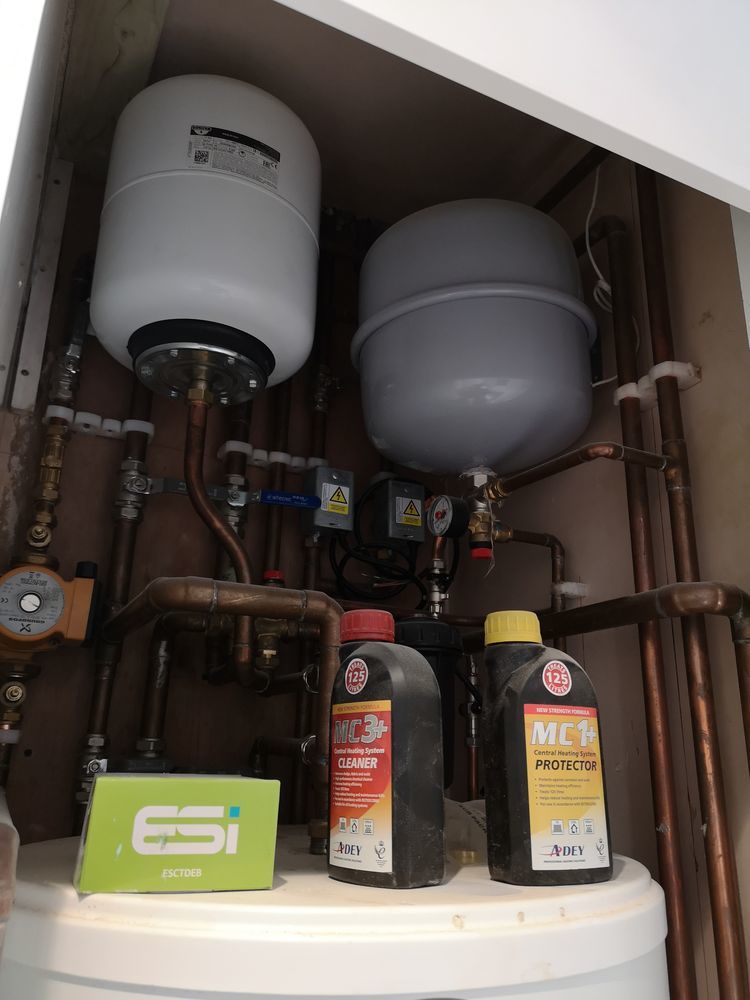
A well-installed heating system with correctly sized expansion vessels and system treatment — the kind of work that extends boiler life significantly.
Sign 4: Yellow or Orange Flame Instead of Blue
Sign 04
A yellow or orange flame is a safety concern, not just a performance issue
A healthy gas boiler burns with a clean blue flame. Yellow or orange flames indicate incomplete combustion, which produces carbon monoxide — an odourless, colourless gas that is dangerous in enclosed spaces. This requires immediate attention and is often a sign that the boiler is beyond economic repair.
Other signs of carbon monoxide risk include: dark staining around the boiler casing, a pilot light that keeps going out, and excessive condensation on windows and walls near the boiler.
If you notice any of these, turn the boiler off, ventilate the space, and call a Gas Safe engineer immediately. Do not sleep in the property until it has been checked.
Sign 5: Significantly Higher Energy Bills
Sign 05
A boiler that is working harder to produce the same heat
As boilers age and internal components wear, they become less efficient. If your heating bills have risen year-on-year without a corresponding increase in energy prices or usage, your boiler may be losing efficiency faster than expected. This is particularly common in boilers over 10 years old.
Modern A-rated condensing boilers are typically 15-25% more efficient than boilers installed before 2010. On an average UK heating bill, that difference can equate to £200-£400 per year in savings — which starts to offset the cost of a new boiler installation within three to five years.
Ask your engineer what efficiency rating your current boiler is operating at. Some can test this directly. If it is below 80%, the efficiency case for replacement is strong.
Sign 6: Parts Are No Longer Available
Sign 06
Discontinued boilers mean expensive delays and workarounds
Manufacturers typically support their boilers with spare parts for around 10 years after a model is discontinued. Once parts go out of production, repairs become increasingly difficult, slow, and expensive. If your engineer tells you parts need to be sourced from a specialist supplier — or are simply unavailable — replacement is the only sustainable path.
Some older boiler brands have been discontinued entirely. If you have a boiler from a manufacturer that no longer trades in the UK, you may already be in this position.
Your engineer can check parts availability when they diagnose a fault. If availability is already becoming an issue on your model, factor that into the repair versus replace decision.
Sign 7: Unusual Noises That Keep Coming Back
Sign 07
Banging, kettling, or rumbling that returns after repair
Boiler noises — particularly kettling (a sound like a boiling kettle) and persistent banging — often indicate limescale buildup on the heat exchanger or a failing pump. These can sometimes be treated, but if the noises return after a flush or repair, it suggests progressive internal damage that is not economically reversible.
Kettling is particularly common in hard water areas like Slough and much of Berkshire, where limescale deposits build up inside the heat exchanger over time. A powerflush can help in mild cases, but in severe cases the heat exchanger itself may need replacing — which on older boilers often costs more than a new installation.
Repair or Replace? Questions to Ask Your Engineer
Before committing to either option, ask your engineer these questions directly:
- How old is this boiler, and what is its expected remaining lifespan?
- Is this fault likely to recur, or is it a one-off issue?
- Are parts still readily available for this model?
- What efficiency rating is this boiler currently achieving?
- If you were in my position, what would you do?
A good engineer will give you a straight answer. If they recommend replacement, ask them to confirm it in writing and get at least one other quote before proceeding.
Most reputable heating companies will provide a free, no-obligation quote for a new boiler installation. At Manako, we always explain your options honestly — including when a repair makes more sense than a replacement.
What a New Boiler Installation Involves
If replacement is the right decision, here is what the process typically looks like with a Gas Safe registered company:
- Survey: An engineer visits to assess your current system, property size, and hot water demands to recommend the right boiler type and size.
- Quote: A fixed, itemised quote covering the boiler unit, installation labour, and any necessary pipework changes or system upgrades.
- Installation: Most like-for-like replacements (combi to combi) are completed in a single day. More complex changes (system to combi, or adding a new location) may take two days.
- Certification: Your engineer registers the new installation with Gas Safe and provides a Building Regulations compliance certificate.
- Warranty: Most manufacturers offer 5 to 10-year warranties on new boilers, provided they are serviced annually by a Gas Safe engineer.
We install Worcester Bosch, Vaillant, and Ideal boilers — three of the most reliable brands available in the UK — and offer extended warranties on all installations.
Related Services
Frequently Asked Questions
How long does a boiler last?
A well-maintained boiler typically lasts 10 to 15 years. Combi boilers on the lower end, system boilers often lasting longer with regular annual servicing.
Is it worth repairing a boiler that is over 10 years old?
Use the 50% rule: if the repair cost is more than 50% of the cost of a new boiler installation, replacement is usually the smarter financial decision. Age alone does not determine this — the type of fault matters too.
What is the most reliable sign a boiler needs replacing?
Repeated breakdowns within a 12-month period is the clearest sign. If you have called an engineer more than twice in a year for different faults, the boiler is nearing the end of its reliable life.
How much does a new boiler cost in Slough?
A new combi boiler fully installed typically costs between £2,000 and £3,500 in Slough and Berkshire, depending on the brand, model, and any pipework changes required. Contact us for a free, no-obligation quote.
Can I get finance on a new boiler?
Many boiler installation companies offer finance options. Ask us about payment plans when you request a quote — we can advise on what is available for your situation.
How do I know if my boiler engineer is Gas Safe registered?
All engineers must carry a Gas Safe ID card. Ask to see it before any work begins. You can also verify registration at the Gas Safe Register website using their licence number. Manako Plumbing's Gas Safe registration number is 934668.
Not sure if your boiler needs repairing or replacing?
We'll give you an honest assessment — no pressure, no upselling. Gas Safe certified, based in Slough.
Get a Free Assessment